

Strong, resilient communities are built through thoughtful planning, shared responsibility, and long-term investment. As communities face growing economic, environmental, and social challenges, resilience has become an essential part of sustainable development. Beyond responding to change, resilient communities are designed to adapt, recover, and continue creating opportunities that improve the well-being of both current and future generations.
Strategic development provides the foundation for this resilience by strengthening infrastructure, expanding access to essential services, encouraging economic participation, and supporting inclusive growth. When governments, businesses, and community leaders work toward common goals, they create environments that are better prepared to withstand challenges while continuing to thrive. Building resilience is not a short-term initiative. It is an ongoing commitment to creating stronger communities through responsible planning and sustainable investment.
This article explores the principles of resilient communities, the benefits they provide, the foundations that support long-term resilience, emerging trends shaping community development, and how visionary leadership contributes to building stronger and more sustainable communities.
Understanding Resilient Communities
Resilient communities are not defined by the absence of challenges but by their ability to prepare for uncertainty, respond effectively, and recover with greater strength. Whether facing economic disruption, climate-related events, or public health emergencies, resilient communities rely on strong institutions, active citizens, and long-term planning to protect people while sustaining development. According to the United Nations Office for Disaster Risk Reduction (UNDRR), resilience is built through proactive strategies that reduce risk and strengthen a community’s capacity to adapt over time.
Preparedness
Prepared communities anticipate challenges before they become crises. Rather than reacting to unexpected events, they establish systems that improve readiness, strengthen local coordination, and protect essential services. Effective preparedness allows communities to respond quickly while minimizing social and economic disruption.
Successful preparedness is strengthened by initiatives that:
- Developing community emergency plans
- Strengthening local response networks
- Protecting essential public services
- Encouraging risk awareness
- Investing in disaster preparedness programs
Preparedness creates confidence because communities understand how to respond when challenges arise. Planning ahead also reduces recovery time and limits long-term disruption. These efforts demonstrate the value of Disaster Preparedness in building stronger and more resilient communities.
Social Cohesion
Resilience is strengthened when people trust one another and work toward shared goals. Communities with strong social connections often recover more quickly because residents, businesses, and local organizations collaborate during times of uncertainty. Trust and participation create a support network that extends beyond government programs.
Communities become more connected by:
- Encouraging civic participation
- Supporting local volunteer initiatives
- Strengthening neighborhood partnerships
- Promoting inclusive decision-making
- Building relationships across communities
The Resilient Cities Network highlights social cohesion as a key factor in helping communities adapt to changing economic and environmental conditions. Strong relationships create opportunities for collaboration while encouraging long-term community resilience. They also reinforce the importance of Community Leadership in supporting sustainable local development.
Adaptive Capacity
Communities must continually evolve as new challenges emerge. Adaptive capacity reflects a community’s ability to learn, innovate, and improve its systems without losing stability. This flexibility enables communities to embrace change while maintaining economic opportunity and social well-being.
Adaptive capacity grows through efforts that:
- Encouraging innovation
- Supporting lifelong learning
- Improving local decision-making
- Expanding digital accessibility
- Strengthening institutional resilience
Research from the World Resources Institute shows that communities with greater adaptive capacity are better equipped to address climate risks, economic shifts, and population growth. Investing in people, knowledge, and innovation creates stronger foundations for future resilience while advancing Innovation across communities.
Preparedness, social cohesion, and adaptive capacity form the foundation of resilient communities. Together, these qualities enable communities to manage uncertainty, recover from adversity, and continue creating opportunities that improve lives and support sustainable long-term development.

Benefits of Resilient Communities
Resilient communities create lasting value by improving people’s ability to adapt, recover, and thrive in an increasingly unpredictable world. Their benefits extend beyond emergency preparedness by strengthening public confidence, supporting local economies, and improving social well-being. Communities that invest in resilience are better positioned to overcome challenges while continuing to grow through collaboration, innovation, and responsible decision-making.
Economic Confidence
Resilient communities create stable environments where businesses, investors, and residents can plan for the future with greater certainty. Strong institutions, reliable public services, and effective governance reduce uncertainty while encouraging sustainable economic activity. This confidence helps communities recover more quickly from disruption and maintain long-term prosperity.
A resilient local economy is strengthened by its ability to:
- Encourage business continuity
- Attract long-term investment
- Support local entrepreneurship
- Reduce economic disruption
- Build investor confidence
The Organisation for Economic Co-operation and Development (OECD) notes that resilient regional economies are better equipped to withstand external shocks while maintaining sustainable growth. Communities that strengthen Economic Opportunity create stronger foundations for long-term prosperity. Economic confidence encourages businesses and residents to invest in the future rather than react to uncertainty.
Public Well-Being
Community resilience is measured not only by economic performance but also by the well-being of the people who live there. Access to healthcare, education, social support, and safe public spaces enables individuals to remain healthy, engaged, and prepared during periods of change. Strong public well-being also reinforces trust between communities and local institutions.
Healthier communities are supported by efforts that:
- Expand access to healthcare
- Improve educational opportunities
- Strengthen social support networks
- Promote public safety
- Encourage community participation
According to the International Federation of Red Cross and Red Crescent Societies (IFRC), resilient communities place people at the center of preparedness and recovery by strengthening local capacity before crises occur. Expanding Healthcare Initiatives also improves resilience by helping communities respond more effectively to future challenges. Strong public well-being creates communities that are better prepared to support one another during periods of uncertainty.
Recovery Capacity
The true strength of a resilient community becomes evident after disruption occurs. Communities with effective recovery systems restore essential services more quickly, rebuild local economies, and support residents throughout the recovery process. Their ability to learn from challenges also strengthens preparedness for future events.
Communities improve recovery capacity by:
- Restoring critical services efficiently
- Coordinating local recovery efforts
- Supporting affected businesses
- Investing in long-term rebuilding
- Applying lessons from previous events
The United Nations Office for Disaster Risk Reduction (UNDRR) emphasizes that resilience is strengthened when recovery planning becomes part of long-term development rather than a short-term response. Communities that encourage Long-Term Planning are better equipped to recover with greater confidence and adaptability. Every challenge becomes an opportunity to strengthen systems, improve preparedness, and build a more resilient future.
Resilient communities create benefits that extend well beyond crisis response. By strengthening economic confidence, improving public well-being, and increasing recovery capacity, they establish conditions where people, businesses, and institutions can continue growing despite uncertainty. These outcomes demonstrate why resilience remains a cornerstone of sustainable community development.
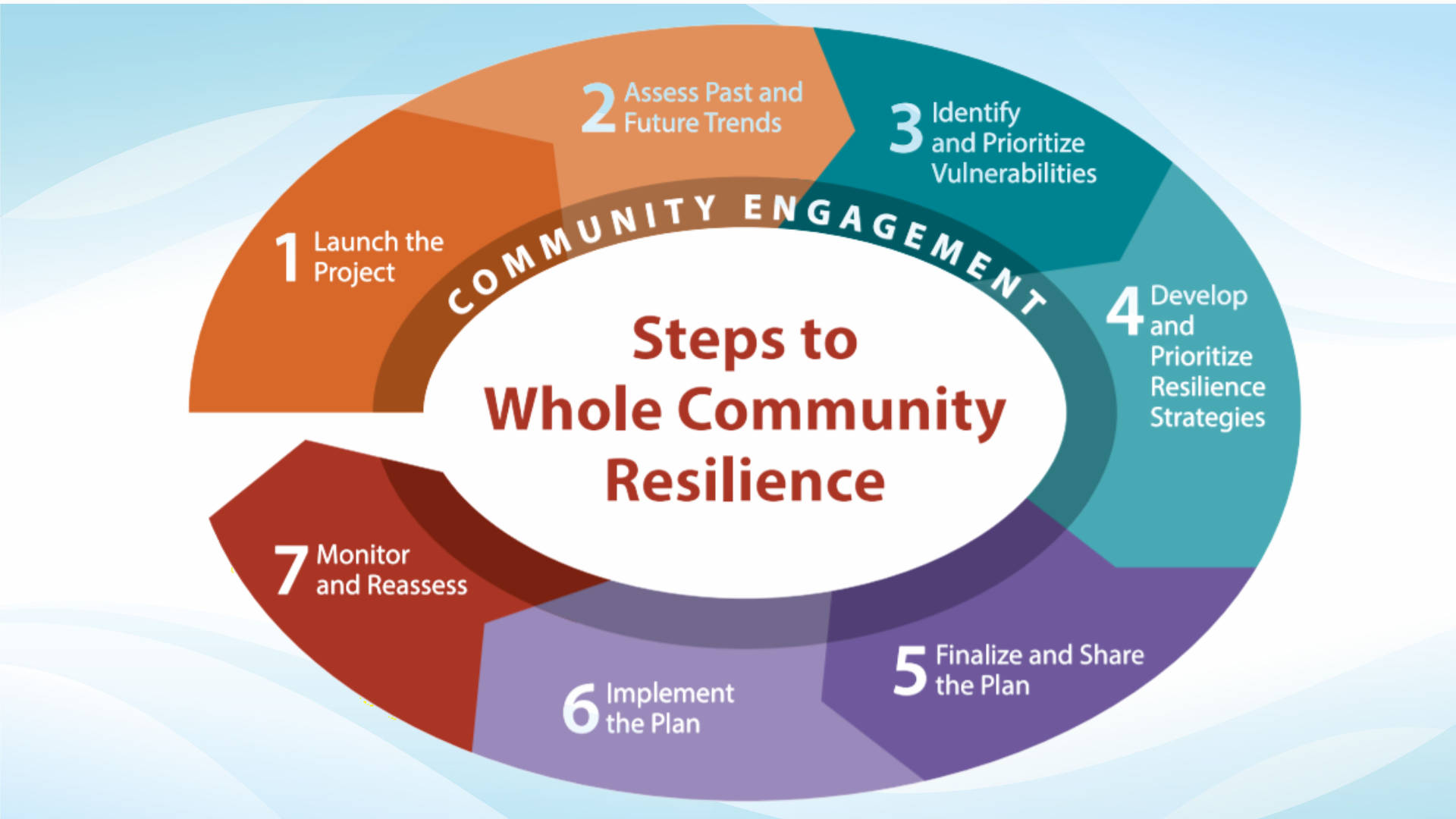
Foundations of Community Resilience
Building resilient communities requires more than responding to challenges as they arise. Lasting resilience depends on strong governance, responsible stewardship of resources, and the ability to prepare for future opportunities. Communities that embrace these principles create environments where people, institutions, and local economies continue to develop with confidence despite changing circumstances.
Collaborative Governance
No single organization can build a resilient community alone. Governments, businesses, nonprofit organizations, and residents each contribute valuable knowledge and resources that strengthen decision-making. When these groups work together, communities become more responsive, transparent, and capable of addressing complex challenges through shared responsibility.
Effective collaboration is strengthened by:
- Encouraging cross-sector partnerships
- Promoting transparent decision-making
- Supporting community participation
- Coordinating local development efforts
- Strengthening institutional accountability
The World Economic Forum recognizes collaborative governance as a critical element of resilient societies because it encourages innovation, trust, and collective action. Communities that embrace Public-Private Partnerships create stronger foundations for long-term resilience. Shared leadership also improves the ability to respond to emerging challenges while maintaining public confidence.
Resource Stewardship
Communities become more resilient when they manage natural, financial, and public resources responsibly. Careful stewardship ensures that development today does not limit opportunities tomorrow. Responsible resource management also strengthens environmental sustainability while supporting long-term economic and social progress.
Sustainable stewardship is achieved by:
- Managing public resources efficiently
- Conserving natural ecosystems
- Encouraging responsible land use
- Supporting efficient energy practices
- Promoting sustainable consumption
Research from the World Resources Institute (WRI) highlights responsible resource management as an essential component of resilient communities. Protecting valuable resources while encouraging Environmental Sustainability allows communities to remain adaptable in the face of changing environmental and economic conditions. These efforts create lasting benefits that extend well beyond individual development projects.
Future Readiness
Resilient communities continuously prepare for new opportunities and evolving challenges. Future readiness requires embracing innovation, strengthening local skills, and adopting flexible policies that allow communities to respond effectively to changing conditions. Communities that invest in future readiness remain competitive while improving long-term quality of life.
Communities prepare for tomorrow by:
- Investing in workforce development
- Encouraging technological adoption
- Supporting continuous learning
- Modernizing public services
- Planning for demographic change
According to the Resilient Cities Network, future-ready communities integrate innovation, inclusive planning, and long-term resilience into everyday decision-making. Expanding Workforce Development helps communities adapt to changing industries while creating new opportunities for economic and social progress. Looking ahead with purpose enables communities to remain resilient in an increasingly dynamic world.
Collaborative governance, responsible resource stewardship, and future readiness provide the long-term foundation for resilient communities. Together, these principles encourage continuous improvement while helping communities adapt, innovate, and create lasting opportunities for future generations.

Thriving in a Changing World
Communities today face a broader range of challenges than ever before, from climate uncertainty and economic disruption to rapid technological change and shifting population needs. Building resilience is no longer limited to emergency planning. Around the world, governments, organizations, and local leaders are adopting new approaches that strengthen communities before challenges arise. These evolving strategies demonstrate that resilience is an ongoing process of continuous improvement rather than a one-time objective.
Climate Adaptation
Communities across the world are increasingly designing neighborhoods and public spaces that can withstand the impacts of changing weather patterns. Nature-based solutions such as wetlands, urban forests, permeable streets, and flood-resilient landscapes are becoming essential parts of modern community planning. These investments not only reduce environmental risks but also improve public health, biodiversity, and the overall quality of life.
The United Nations Environment Programme (UNEP) explains that climate adaptation has become a fundamental component of sustainable community planning because proactive investments often cost far less than post-disaster recovery. Communities that embrace Climate Action create safer environments while protecting people, infrastructure, and local ecosystems from future risks.
Digital Inclusion
Access to technology has become a critical part of community resilience. Reliable internet connectivity, digital literacy, and accessible online public services allow residents to continue learning, working, accessing healthcare, and communicating during periods of disruption. Digital inclusion also ensures that vulnerable populations remain connected to essential services when traditional systems are interrupted.
According to the International Telecommunication Union (ITU), expanding digital access strengthens economic participation, improves service delivery, and supports more inclusive societies. Integrating technology with Digital Transformation helps communities remain connected while creating new opportunities for education, employment, and innovation.
Community Innovation
Some of the most resilient communities are those that encourage people to develop local solutions for local challenges. Innovation often emerges through partnerships between residents, businesses, educational institutions, and nonprofit organizations that work together to solve shared problems. These collaborations strengthen local leadership while creating practical solutions that reflect the unique needs of each community.
Research from the Rockefeller Foundation highlights that community-led innovation plays an important role in improving resilience because local knowledge often leads to more sustainable and effective outcomes. Supporting Social Impact initiatives encourages communities to become more adaptable while creating opportunities that continue benefiting future generations.
The future of resilient communities will be shaped by their ability to adapt to changing conditions while embracing innovation and inclusion. Communities that invest in climate adaptation, digital access, and locally driven solutions are better prepared to navigate uncertainty and create lasting opportunities for the people they serve.

Gilbert’s Development Vision
Resilient communities are created through consistent investment, responsible leadership, and a commitment to long-term progress. Throughout his career, Gilbert Chagoury has supported development initiatives that strengthen economic opportunity, improve essential infrastructure, and encourage sustainable growth. His approach reflects the belief that resilient communities are built by creating lasting opportunities rather than temporary solutions.
Empowering Communities
Strong communities flourish when development creates opportunities that improve everyday life. Investments in education, healthcare, business activity, and public infrastructure strengthen local capacity while helping communities become more self-reliant. Sustainable development delivers its greatest impact when it enables people to participate in long-term economic and social progress.
Community-focused development is strengthened by efforts that:
- Expanding access to essential services
- Encouraging inclusive economic participation
- Supporting education and skills development
- Creating opportunities for local businesses
- Improving community well-being
Gilbert Chagoury’s development philosophy emphasizes investments that continue creating value long after projects are completed. His commitment to Healthcare and community-focused initiatives reflects the importance of strengthening people alongside physical development. The United Nations Development Programme (UNDP) recognizes that investing in people is fundamental to building resilient and sustainable communities.
Catalyzing Progress
Large-scale development projects can create ripple effects that extend far beyond their immediate locations. Modern infrastructure, commercial investment, and integrated planning encourage employment, attract businesses, and stimulate broader economic activity. These outcomes help communities become more resilient by creating diverse opportunities for long-term prosperity.
Transformational development often creates value by:
- Attracting responsible private investment
- Expanding commercial opportunities
- Supporting modern infrastructure
- Strengthening local employment
- Encouraging long-term economic activity
Eko Atlantic illustrates how strategic planning and large-scale development can contribute to economic confidence while supporting sustainable urban expansion. By creating an environment designed for business, investment, and modern living, the project reflects principles that strengthen resilience through opportunity rather than dependence. The International Finance Corporation (IFC) continues to emphasize that responsible private investment plays an important role in creating resilient and inclusive economies.
Building a Legacy
The strongest development initiatives continue creating opportunities for generations after construction is complete. Lasting resilience is measured by the ability of communities to adapt, innovate, and grow while maintaining economic stability and social well-being. Development that leaves a positive legacy continues benefiting people long into the future.
Long-term community impact is achieved through:
- Encouraging sustainable economic opportunities
- Strengthening institutional capacity
- Supporting future generations
- Creating resilient local economies
- Promoting responsible long-term development
Gilbert Chagoury’s long-term vision reflects a commitment to creating development that delivers enduring value rather than short-term success. His work demonstrates how responsible investment and thoughtful planning can strengthen communities while supporting sustainable progress. According to the OECD Centre for Entrepreneurship, SMEs, Regions and Cities, long-term development strategies help communities become more resilient, competitive, and prepared for future challenges.
Resilient communities are built through vision, sustained investment, and a commitment to creating opportunities that endure. Gilbert Chagoury’s development philosophy reflects these principles by supporting initiatives that strengthen people, encourage economic progress, and contribute to communities that remain resilient for generations to come.
Strengthening Communities for Tomorrow
Resilient communities are shaped by more than their ability to overcome challenges. They are strengthened through thoughtful leadership, inclusive opportunities, and a long-term commitment to creating places where people can live, work, and prosper with confidence. As global priorities continue to evolve, resilience will remain a defining characteristic of communities that successfully balance economic progress, social well-being, and sustainable development.
Building resilience is an ongoing journey rather than a final destination. Communities that invest in collaboration, innovation, and responsible planning are better prepared to adapt to change while creating lasting value for future generations. By placing people at the center of development, resilience becomes a foundation for stronger institutions, greater opportunity, and a more sustainable future.
Discover how The Chagoury Group is contributing to projects that support long-term growth and stronger communities. Gilbert Chagoury’s commitment to strategic development continues to demonstrate how visionary investment can create lasting opportunities for future generations.
Frequently Asked Questions
What are resilient communities?
Resilient communities are communities that can prepare for, adapt to, and recover from economic, environmental, and social challenges while continuing to support sustainable growth, public well-being, and long-term development.
Why are resilient communities important?
Resilient communities help reduce the impact of disruptions by strengthening local institutions, encouraging collaboration, supporting economic stability, and improving the quality of life for residents through long-term planning.
How does strategic development build resilient communities?
Strategic development strengthens resilient communities by promoting inclusive planning, responsible investment, strong public services, and sustainable policies that enable communities to adapt, grow, and thrive despite changing conditions.