

Development Finance plays a vital role in addressing some of the world’s most pressing economic and social challenges. From expanding essential infrastructure and improving public services to supporting climate action and reducing poverty, development finance provides the long-term funding needed to turn ambitious goals into sustainable progress. As countries seek to build stronger economies and create greater opportunities for their people, effective financing has become just as important as the projects it supports.
Unlike traditional commercial financing, development finance is designed to generate lasting social and economic value alongside financial sustainability. It brings together governments, development institutions, private investors, and international organizations to fund initiatives that strengthen communities, encourage innovation, and promote inclusive growth. By directing capital toward projects with long-term impact, development finance helps create resilient economies that can adapt to future challenges while improving quality of life.
This article explores the principles of development finance, its role in supporting sustainable growth, the factors that make financing models successful, emerging trends shaping the future of development investment, and how Gilbert Chagoury’s long-term development philosophy reflects these objectives.
Understanding Development Finance
Development finance is a specialized approach to funding projects that create long-term economic, social, and environmental value. Unlike traditional financing, which focuses on commercial returns, development finance supports initiatives that improve infrastructure, expand essential services, and strengthen economies. According to the International Finance Corporation (IFC), mobilizing private capital alongside public investment is essential for accelerating sustainable development in emerging economies.
Development Capital
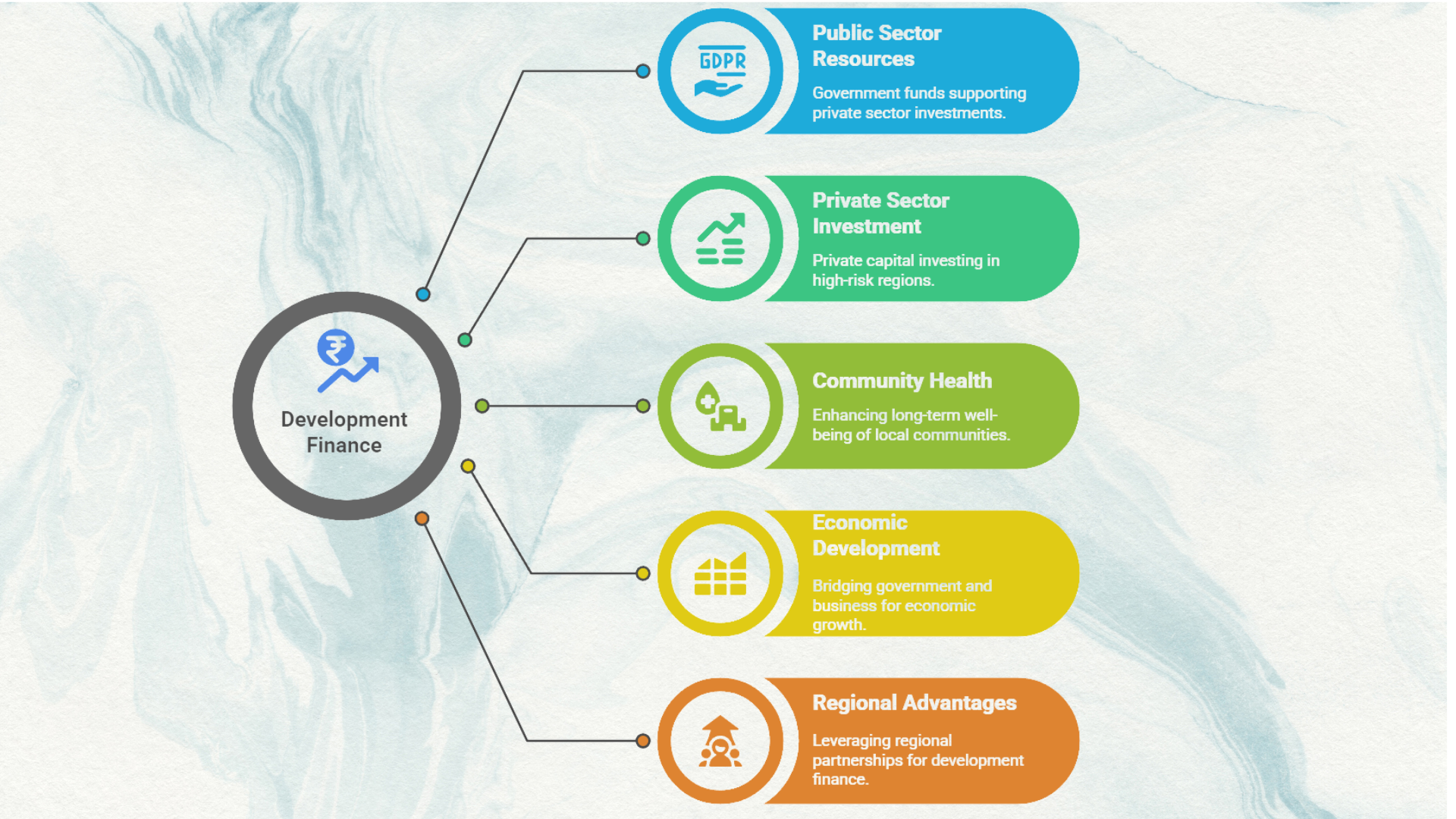
Development finance brings together multiple funding sources to support projects with lasting impact. Combining public investment, institutional financing, philanthropic support, and private capital reduces financial risk while enabling large-scale initiatives to move forward.
Development capital helps to:
- Mobilize public and private funding
- Support projects with long-term social impact
- Reduce financing gaps in emerging economies
- Encourage responsible investment practices
- Strengthen sustainable economic development
This collaborative approach creates opportunities for governments, investors, and communities alike. Initiatives that encourage Economic Growth often rely on development capital to transform ambitious ideas into measurable results.
Financing Models
Development finance succeeds because it adapts funding structures to meet different development needs. Flexible financial instruments allow governments and development partners to support projects that may not qualify for conventional commercial financing.
Common financing approaches include:
- Concessional loans with favorable terms
- Development grants for priority sectors
- Equity investments in high-impact projects
- Credit guarantees that reduce investment risk
- Blended finance combining public and private capital
The Global Infrastructure Facility (GIF) identifies blended finance as a key tool for attracting additional investment into sustainable development. Flexible financing also strengthens Strategic Investment by encouraging collaboration across sectors while improving project viability.
Long-Term Impact
Development finance focuses on outcomes that continue delivering value long after projects are completed. Beyond financial returns, it supports stronger institutions, improved livelihoods, and inclusive economic progress.
Its long-term impact includes:
- Creating sustainable employment opportunities
- Improving access to essential public services
- Supporting climate-resilient development
- Encouraging inclusive economic participation
- Strengthening future investment capacity
The United Nations Financing for Sustainable Development Office emphasizes that achieving the Sustainable Development Goals depends on mobilizing long-term public and private finance. Supporting Sustainable Investment helps ensure today’s funding decisions continue generating value for future generations.
Development finance combines development capital, flexible financing, and long-term vision to create meaningful and lasting progress while strengthening economies and communities.

Bridging the Global Financing Gap
Growing demand for infrastructure, healthcare, education, clean energy, and climate resilience has widened the global financing gap. Many countries lack sufficient long-term capital to deliver these priorities, making development finance an essential tool for sustainable progress. According to the Global Infrastructure Facility (GIF), meeting global infrastructure needs requires trillions of dollars in additional investment each year.
Financing Essential Infrastructure
Reliable infrastructure supports productivity, connectivity, and economic growth, yet many projects struggle to secure funding because of high costs and long investment horizons. Development finance helps bridge this gap by supporting projects that deliver lasting public value.
Long-term financing contributes to:
- Expanding transportation networks
- Modernizing energy systems
- Improving water and sanitation facilities
- Strengthening digital connectivity
- Supporting resilient public infrastructure
The Global Infrastructure Hub highlights the importance of closing infrastructure investment gaps to improve productivity and sustainable development. Investments that strengthen Infrastructure Development also encourage future economic expansion.
Unlocking Private Capital
Governments alone cannot finance every development priority. Development finance encourages institutional investors, commercial banks, and private enterprises to participate in projects that create both financial and social value while reducing investment risks.
Private capital is mobilized by:
- Reducing financial risk for investors
- Improving project bankability
- Encouraging institutional investment
- Strengthening investor confidence
- Expanding financing for underserved sectors
The Organisation for Economic Co-operation and Development (OECD) notes that mobilizing private finance is essential for achieving sustainable development. Expanding Responsible Investment creates opportunities that benefit economies while increasing development impact.
Supporting Emerging Economies
Many developing countries face limited access to affordable long-term finance despite significant growth potential. Development finance directs resources toward projects that strengthen local economies, improve employment, and encourage sustainable industrial development.
Development finance supports emerging economies by:
- Expanding access to long-term capital
- Encouraging inclusive economic participation
- Strengthening local financial markets
- Supporting sustainable industrial development
- Reducing barriers to economic growth
The United Nations Conference on Trade and Development (UNCTAD) emphasizes that increasing investment in developing economies is essential for sustainable growth and reducing inequality. Initiatives that promote Inclusive Growth help create stronger economies while expanding opportunities for businesses and communities.
Closing the global financing gap requires more than additional funding. It depends on strategic partnerships, responsible investment, and long-term financial solutions that enable sustainable economic progress across the world.
Creating Effective Development Finance Systems
Development finance succeeds when strong institutions, transparent governance, and innovative financial practices work together to deliver long-term results. Securing funding is only the first step. Sustainable outcomes depend on how financial resources are managed, monitored, and directed toward projects that generate measurable economic and social impact. According to the Asian Development Bank (ADB), effective financial systems are essential for transforming development investments into lasting progress.
Risk Management
Every development project involves financial, political, and operational risks that can affect long-term success. Effective risk management helps governments, financial institutions, and investors identify potential challenges early while creating strategies that improve project stability and investor confidence. Managing risk responsibly encourages greater participation in development initiatives without compromising long-term objectives.
Successful risk management is strengthened by:
- Identifying financial and operational risks early
- Diversifying funding portfolios
- Strengthening project oversight
- Encouraging shared investment responsibility
- Monitoring project performance continuously
The Multilateral Investment Guarantee Agency (MIGA) highlights risk mitigation as a key factor in attracting investment to developing markets. Strengthening Investment Confidence enables development projects to secure broader financial support while improving long-term sustainability. Effective risk management ultimately protects both investors and the communities these projects serve.
Institutional Capacity
Strong institutions provide the leadership and expertise needed to manage development finance effectively. Transparent governance, skilled professionals, and efficient public administration ensure that financial resources are allocated responsibly while maintaining accountability throughout every stage of implementation.
Institutional effectiveness depends on the ability to:
- Strengthen financial governance
- Improve public sector expertise
- Increase operational transparency
- Enhance regulatory oversight
- Promote accountable decision-making
Research from the OECD Public Governance shows that well-governed institutions improve the effectiveness of public investment and strengthen long-term development outcomes. Expanding Good Governance helps create greater confidence among investors, development partners, and local communities. Strong institutions also improve the resilience of national financial systems.
Measuring Impact
Development finance is increasingly evaluated by the results it delivers rather than the amount of capital invested. Governments, investors, and development institutions now use measurable indicators to assess whether projects improve economic opportunity, environmental sustainability, and social well-being. This results-driven approach strengthens accountability while encouraging continuous improvement.
Meaningful impact is demonstrated by:
- Measuring social and economic outcomes
- Tracking environmental performance
- Evaluating long-term project sustainability
- Improving accountability through reporting
- Using evidence to guide future investments
The Global Impact Investing Network (GIIN) emphasizes that measuring impact helps investors understand how financial resources contribute to sustainable development while improving future investment decisions. Supporting Sustainable Finance encourages greater transparency and ensures development projects continue creating value long after implementation.
Strong financial systems depend on responsible risk management, capable institutions, and measurable outcomes. Together, these principles ensure that development finance remains effective, accountable, and focused on creating lasting progress for economies, businesses, and communities.

The Future of Development Finance
Development finance continues to evolve as global priorities shift toward sustainability, innovation, and inclusive economic growth. Today, financial institutions are looking beyond traditional funding by supporting solutions that address climate risks, encourage responsible investment, and expand financial access. These emerging trends are shaping a more adaptable approach to financing long-term development.
Climate Finance
Climate finance has become an important part of development strategies by supporting projects that strengthen environmental resilience and reduce carbon emissions. Investments in renewable energy, sustainable infrastructure, and climate adaptation help countries prepare for future challenges while encouraging long-term economic stability. The Green Climate Fund identifies climate investment as a key driver of sustainable development, reinforcing the importance of Climate Investment in future financing strategies.
Impact Investing
Development finance is increasingly focused on creating measurable social and environmental outcomes alongside financial returns. Governments and investors are directing capital toward projects that improve healthcare, education, clean energy, and economic inclusion. According to the Global Steering Group for Impact Investment (GSG Impact), impact investing continues to expand as organizations seek long-term value through Social Investment that benefits both communities and economies.
Digital Finance
Technology is transforming how development finance reaches people and businesses. Digital payment systems, financial technology, and data-driven decision-making are improving financial inclusion while making investment processes more efficient and transparent. The Consultative Group to Assist the Poor (CGAP) highlights digital financial services as an important tool for expanding economic participation. Continued Digital Innovation will help development finance become more accessible, efficient, and responsive to future challenges.
As financing priorities continue to evolve, development finance will play an even greater role in supporting sustainable progress through innovation, responsible investment, and inclusive economic development.

Gilbert’s Long-Term Development Approach
Development finance is ultimately measured by its ability to create lasting economic and social value. The same principle applies to long-term development leadership, where investments are guided by sustainability, opportunity, and future impact rather than short-term returns. Gilbert Chagoury’s documented work reflects this perspective through projects and initiatives that support economic progress, encourage responsible investment, and contribute to stronger communities.
Investing with Vision
Long-term development begins with a clear vision that extends beyond immediate financial outcomes. Sustainable investment considers how projects will strengthen economies, encourage business activity, and create opportunities for future generations. A forward-looking approach allows development initiatives to deliver lasting value while adapting to changing economic conditions.
Vision-driven development is supported by:
- Prioritizing long-term economic value
- Encouraging sustainable investment decisions
- Supporting responsible business growth
- Creating opportunities for future generations
- Focusing on lasting community impact
Gilbert Chagoury’s development philosophy demonstrates the importance of planning for long-term progress rather than short-term success. Through Economic Development, his approach highlights how strategic investment can strengthen economies while creating enduring value. The World Bank recognizes long-term investment as a key contributor to sustainable economic development and resilience.
Enabling Opportunity
Development finance achieves its greatest impact when investment creates opportunities for people, businesses, and communities to grow together. Projects that improve commercial activity and encourage economic participation contribute to stronger local economies while supporting inclusive development.
Sustainable opportunities are created by:
- Encouraging private sector participation
- Supporting business expansion
- Creating employment opportunities
- Strengthening local economies
- Promoting inclusive prosperity
Projects associated with the Chagoury Group reflect a commitment to development that supports long-term economic activity and investment. Gilbert Chagoury’s emphasis on responsible growth demonstrates how well-planned initiatives can encourage opportunity while contributing to broader economic progress. According to the International Finance Corporation (IFC), private sector participation remains essential for achieving sustainable development outcomes.
Creating Lasting Value
The true success of development is reflected in its ability to continue delivering benefits long after a project is completed. Lasting value comes from investments that strengthen economic resilience, encourage innovation, and improve quality of life for future generations. This long-term perspective remains central to sustainable development around the world.
Long-term value is achieved by:
- Supporting sustainable economic progress
- Strengthening investment confidence
- Encouraging responsible development
- Improving long-term competitiveness
- Building resilient communities
Gilbert Chagoury’s long-standing commitment to strategic development illustrates how thoughtful investment can extend beyond individual projects to support broader economic advancement. Strengthening Leadership in Development encourages initiatives that continue generating value while inspiring responsible growth. The Organisation for Economic Co-operation and Development (OECD) continues to emphasize that long-term investment and effective leadership are fundamental to sustainable development.
Development finance is most effective when financial resources are guided by vision, responsibility, and a commitment to lasting progress. Gilbert Chagoury’s development philosophy reflects these principles by supporting initiatives that encourage opportunity, strengthen economies, and create value that continues benefiting future generations.

Financing a Sustainable Future
Development finance is more than a financial framework. It is a long-term commitment to creating opportunities that strengthen economies, improve lives, and support sustainable progress. By bringing together governments, financial institutions, and private investors, it enables projects that address today’s challenges while laying the foundation for future generations. As global priorities continue to evolve, strategic financing will remain essential for delivering inclusive and lasting development.
The future of development finance will depend on collaboration, innovation, and responsible leadership. Financial resources achieve their greatest impact when they support projects that encourage resilience, expand opportunity, and create measurable value for society. With the right vision and long-term perspective, development finance can continue driving meaningful progress across communities and economies worldwide.
Explore how The Chagoury Group supports long-term development through strategic investment and transformative projects. Gilbert Chagoury’s commitment to sustainable progress demonstrates how visionary leadership can create lasting economic and social value.
Frequently Asked Questions
What is the purpose of development finance?
Development finance provides long-term funding for projects that promote economic growth, social progress, and environmental sustainability. It helps governments, businesses, and development institutions finance initiatives that create lasting benefits for communities and future generations.
Who provides development finance?
Development finance is provided by governments, multilateral development banks, development finance institutions, international organizations, and private investors. These stakeholders work together to fund projects that support sustainable development, infrastructure, healthcare, education, and economic opportunity.
How is development finance different from traditional finance?
Unlike traditional finance, which primarily focuses on financial returns, development finance balances economic performance with social and environmental impact. It supports projects that improve public services, strengthen economies, reduce inequality, and contribute to long-term sustainable growth.